Welcome to the Gonsalvez Lab!
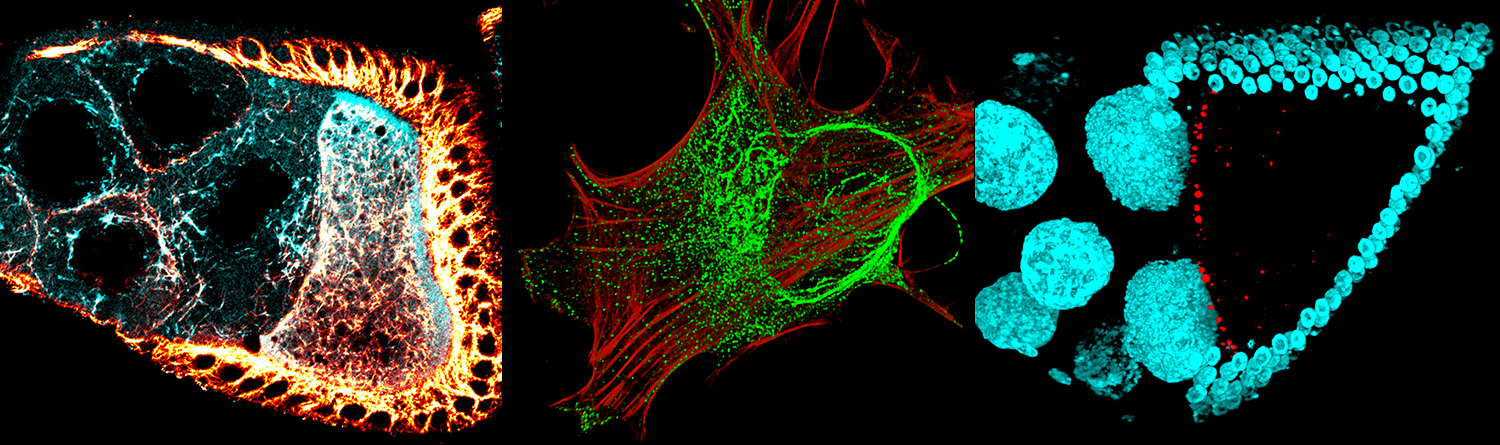
Inside every living cell is a bustling, microscopic city that relies on a highly efficient transportation system to survive and function. Instead of roads and highways, cells use dynamic filamentous networks known as the cytoskeleton to move cargo. Cellular cargo can be small, like individual proteins or mRNAs, or quite large, like vesicles or organelles. Just like a delivery driver navigating city streets to bring a package to where it is needed, specialized protein complexes known as molecular motors perform an equivalent function within our cells. These motors use energy derived from ATP hydrolysis to transport cargo along the microtubule and actin cytoskeletal tracks.
Our research focuses on understanding the fundamental mechanisms that govern this intricate cellular transit system. Our lab investigates two main questions: how do molecular motors function to move cargo, and how does the cell correctly organize its cytoskeletal tracks to ensure deliveries arrive at the right destination at the right time? By studying the mechanics of these motors and the architecture of the microtubule and actin networks, we aim to uncover how cells maintain order, adapt to challenges, and enable the complex processes necessary for life.

“I want to stand as close to the edge as I can without going over. Out on the edge you see all kinds of things you can't see from the center.”
― Kurt Vonnegut Jr., Player Piano